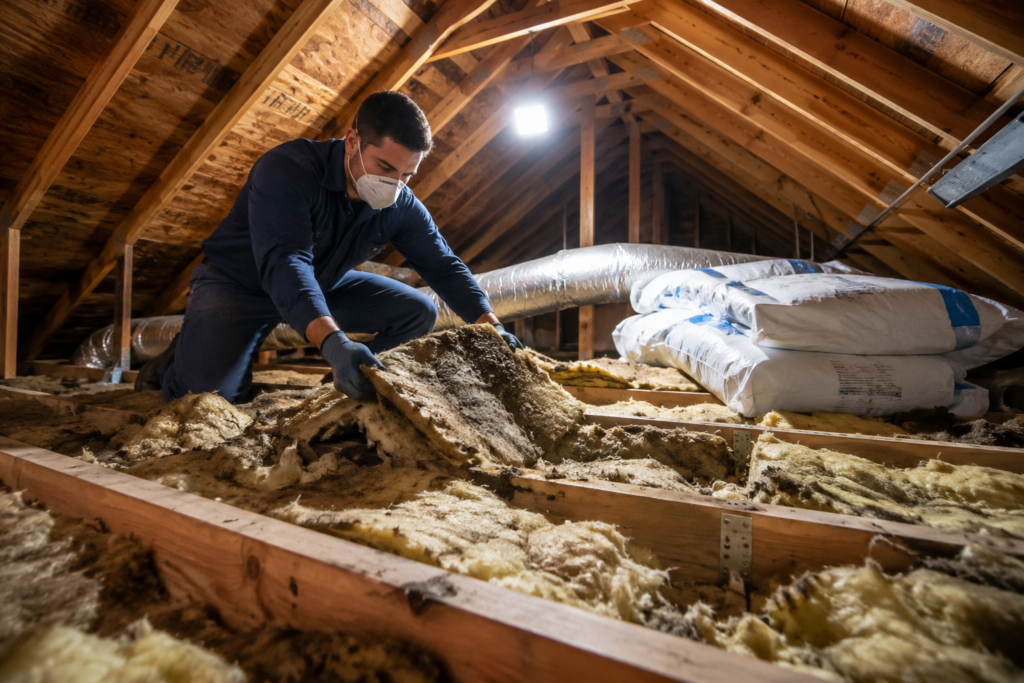
If you’ve climbed into your attic lately and noticed insulation that’s dark, damp, matted down, or smells musty, you’re probably already asking the question that brought you here: how much is this going to cost to fix? It’s a fair question, and the honest answer is “it depends” – but not in a vague, hand-wavy way. There are specific, predictable factors that drive the price of attic insulation removal in Cape Coral, and once you understand them, you can get a realistic number for your own home before you ever call a contractor.
This guide breaks down what actually goes into the cost, what can make a job more or less expensive, and how to tell the difference between a quote that’s fair and one that’s padded.
Why Cape Coral Attics Need Insulation Removed So Often
Homes in Southwest Florida deal with a combination of problems that homeowners in drier climates simply don’t. Year-round humidity, intense summer storms, and hurricane season all put pressure on your roof and attic space. When a roof leak goes unnoticed for even a few weeks, or a storm drives moisture into the soffits, the insulation above your ceiling becomes a sponge. Once fiberglass or cellulose insulation gets wet, it stays wet – and wet insulation is one of the most common breeding grounds for attic mold in the region.
That’s the core reason removal jobs are so common here: it’s rarely about insulation simply wearing out. It’s about water intrusion, pest contamination, or mold growth that makes the existing material unsafe to leave in place. If you’re dealing with insulation that’s been affected by a leak, it’s worth reading through what our team walks through during wet insulation removal and replacement – it covers the signs that moisture has already compromised the material.
If your attic insulation in Cape Coral looks dark, damp, or matted down, it usually didn’t get that way on its own. A roof leak, a washing machine that leaked into the attic space, or slow-building humidity can all soak insulation before you ever notice a problem. When that happens, our wet insulation removal and replacement service handles the job safely, pulling out contaminated material and prepping the space for fresh insulation. Not sure if the damage is isolated or something bigger? Our attic water damage repair team can inspect the source before removal starts, so you’re not paying to redo the same job twice. If you’re still comparing options, our guide on insulation removal companies in Cape Coral covers what to ask before you hire anyone. Call (239) 445-0054 for a free inspection.
The Main Cost Factors
1. Attic size:- This is the single biggest driver of price. Most Cape Coral contractors price attic insulation removal by the square foot, and a typical range runs from about $1 to $3 per square foot depending on accessibility and contamination level. A 1,200 square foot attic (common for a 3-bedroom single-story home) might run $1,200–$3,600 for removal alone, before replacement.
2. Type of insulation being removed:- Blown-in cellulose is generally faster and cheaper to vacuum out than batt fiberglass, which sometimes has to be cut, bagged, and hauled out by hand – especially if it’s stapled to the joists or has settled into hard-to-reach areas near the eaves.
3. Contamination level:- This is where costs swing the most. Insulation that’s simply old and thin is a straightforward vacuum-and-remove job. Insulation that’s wet, moldy, or contaminated by rodents requires containment, air scrubbing, and sometimes antimicrobial treatment of the attic framing – all of which add labor and equipment costs. If mold is visible or suspected, it’s worth having it assessed alongside our mold remediation services rather than treated as a simple insulation swap.
4. Attic accessibility:- Attics with pull-down stairs, low clearance, or limited walkway space (common in older Cape Coral homes) take longer to work in, which shows up in labor costs. A walk-up attic with good headroom is faster and cheaper to service than a cramped crawl-style attic.
5. Disposal requirements:- Contaminated insulation – especially anything affected by mold or rodent waste – often has to be bagged and disposed of as regulated waste rather than standard debris, which adds a disposal fee that clean, dry insulation wouldn’t incur.
6. Replacement material and R-value:- Removal is only half the job for most homeowners. If you’re replacing with a higher R-value blown-in cellulose or fiberglass batt to improve energy efficiency, expect $1.50–$3.50 per square foot on top of removal costs, depending on the target R-value (R-30 to R-38 is standard for this climate).
Typical Price Ranges in Cape Coral
While every attic is different, here’s a realistic range homeowners in the area can expect:
- Small attic (under 800 sq ft), light contamination: roughly $800–$1,800 for removal only
- Average attic (1,000–1,500 sq ft), moderate contamination or moisture damage: roughly $1,800–$4,000 for removal only
- Larger attic (1,500+ sq ft) or heavy mold/pest contamination: $4,000–$7,000+ for removal, sometimes more if structural drying or antimicrobial treatment is required
- Removal + full replacement: add $1.50–$3.50 per square foot to whichever removal range applies to your home
These figures are ballpark ranges based on typical attic insulation removal projects in Southwest Florida, not a quote — the only way to get an accurate number is a physical inspection, because contamination level and accessibility can swing the price significantly in either direction.
Red Flags That Push the Price Higher (and Why That’s Not a Bad Thing)
Homeowners sometimes get sticker shock when a quote comes in higher than a competitor’s, but a higher number is often explained by things you’d actually want done properly:
- Visible mold growth requiring containment and remediation rather than just vacuum removal – this is a sign the contractor is treating it as a health and safety issue, not just a cleanup job. If your attic has active mold, that’s a separate (and more serious) process than routine insulation removal – see our attic mold removal page for what that process involves.
- Water-damaged decking or joists underneath the insulation, which need to dry out or be repaired before new insulation goes in. This is common after a slow roof leak, and our attic water damage repair team handles this alongside insulation work when needed.
- Rodent contamination, which requires more thorough sanitization before new insulation is installed
- Poor original installation, where insulation was compressed, gapped, or improperly vented, requiring more prep work to correct ventilation issues before replacing
A quote that seems unusually low compared to others is worth a second look – it may not include full contamination removal, proper disposal, or antimicrobial treatment if mold is present.
How to Get an Accurate Number for Your Home
Because attic conditions vary so much house to house, the most reliable way to budget is a professional inspection. This lets a technician actually assess:
- Square footage and attic layout
- Type and depth of existing insulation
- Whether there’s active or past moisture intrusion
- Presence of mold, pests, or debris
- Ventilation issues that could cause the problem to recur
If you’re not sure whether what you’re dealing with is a simple insulation issue or something tied to a bigger water intrusion problem, a water damage inspection is a good starting point – it identifies the root cause so you’re not just replacing insulation that will get wet again from the same leak.
Serving Cape Coral and Surrounding Communities
We regularly handle attic insulation removal for homeowners throughout Cape Coral, including Stonewater, Mid-Cape, Cape Royal, and Kismet/El Dorado. Attic conditions in older sections of the city often differ from newer construction, and our estimates account for that when we walk your specific property.
The Bottom Line
Attic insulation removal in Cape Coral typically runs anywhere from $800 on a small, lightly contaminated attic to $7,000+ on a larger home with mold or water damage complicating the job. The price isn’t arbitrary – it tracks directly with square footage, contamination level, accessibility, and whether replacement is bundled in. The best way to avoid surprises is a hands-on inspection rather than a phone estimate, since the difference between a “clean” attic and a contaminated one can double the cost.
If you’ve noticed musty smells, visible staining, or sagging insulation in your attic, don’t wait – moisture problems in an attic tend to get worse, not better, especially heading into Florida’s rainy season. Contact us for a free inspection and an accurate, itemized quote for your home.
Leave a Reply