If you’re typing “flood damage restoration near me” into your phone right now, water is probably already on your floor. That’s the reality for most Cape Coral homeowners searching this phrase – it’s rarely a research project done in advance. It’s usually a 2 a.m. search after a pipe bursts, a storm surge pushes water under the door, or a slow leak finally shows itself as a soaked carpet.
That urgency is exactly why so many homeowners end up with the wrong company. When you’re standing in an inch of water, it’s tempting to call whoever answers first. But a rushed decision here can cost you thousands of dollars later – in mold remediation, structural repair, or a denied insurance claim. Before you make that call, here’s what actually matters.
Why “Near Me” Isn’t Enough on Its Own
Proximity matters for flood damage – every hour water sits on drywall, subflooring, or insulation increases the chance of secondary damage. But being close by doesn’t tell you whether a company is licensed, insured, or equipped to handle Southwest Florida’s specific conditions: high humidity, concrete block construction, and the mold risk that comes with both.
When you search for flood damage restoration near me in Cape Coral, FL, you’ll get a mix of national franchises, one-truck operators, and local specialists. The fastest response isn’t always the best outcome. What you actually want is a company that can arrive quickly and execute a proper flood damage cleanup – not just pull out a shop vac and call it done.
What a Real Flood Damage Response Should Look Like
A legitimate restoration company follows a structured process, not a guess-and-check approach. Here’s the sequence you should expect:
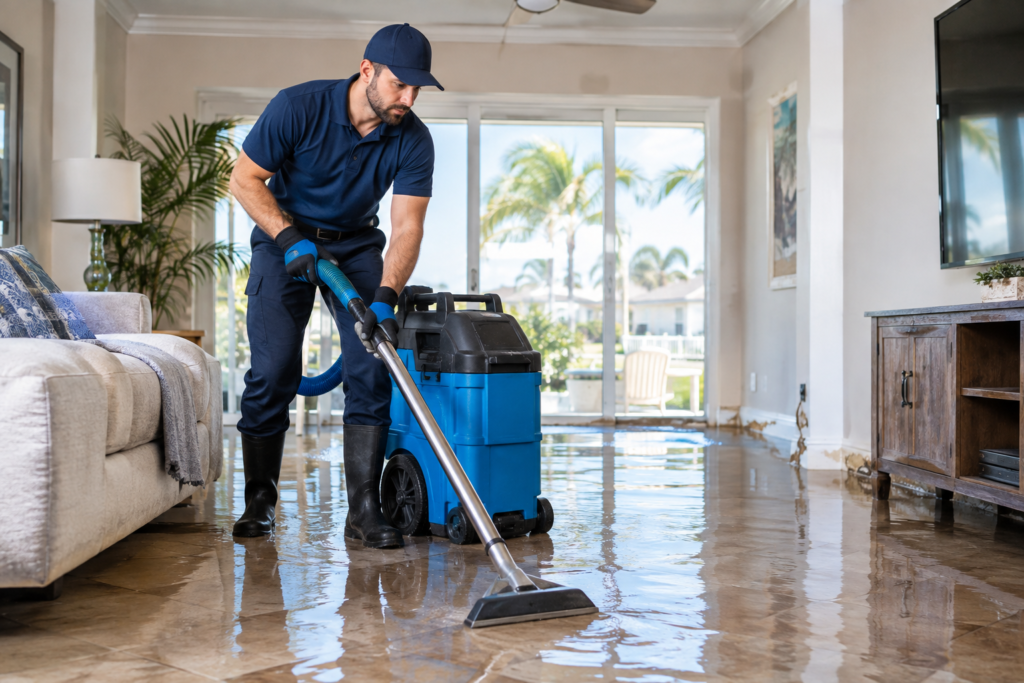
1. Emergency water extraction. The first priority is removing standing water before it soaks deeper into flooring, drywall, and subfloor materials. This should happen with industrial pumps and extraction equipment – not a wet/dry vac from a hardware store. Ask specifically about their emergency water extraction process and how quickly they can be on-site.
2. A real inspection, not a guess. Before any drying begins, a proper crew should perform a water damage inspection using moisture meters and thermal imaging to find water that’s migrated into walls, under flooring, or into crawlspaces where it isn’t visible. Skipping this step is one of the most common reasons homeowners end up with hidden mold six weeks later.
3. Structural drying and dehumidification. Visible water is only part of the problem. Materials like drywall, subfloor, and insulation hold moisture long after the surface looks dry. This is where structural drying & dehumidification equipment comes in – industrial air movers and dehumidifiers run for days, not hours, monitored with follow-up moisture readings until materials return to a safe range.
4. Assessing what needs to be removed. Wet insulation, in particular, rarely dries out safely once saturated. If your attic or wall cavities took on water, ask directly whether wet insulation removal and replacement is part of their process, and why.
5. Mold prevention – before it starts, not after. Florida’s humidity means mold can begin developing within 24–48 hours of water exposure. A company that treats mold remediation as an afterthought instead of a built-in step in the drying process is setting you up for a second problem later.
Questions to Ask Before You Hire Anyone
When you’re comparing “near me” results, a five-minute phone call can save you from a bad decision. Ask:
- How fast can you physically be on-site, not just answer the phone?
- Are you licensed and insured in the State of Florida?
- Do you use moisture meters and thermal imaging, or just visual inspection?
- Will you document everything with photos for my insurance claim?
- What’s included in your drying process, and how long does it typically take?
- Do you handle mold prevention as part of the same job, or is that a separate call?
If a company can’t answer these clearly and confidently, that’s a signal to keep looking – even if they’re the closest option on the map.
Red Flags That Cost Cape Coral Homeowners Money
A few patterns show up again and again with homeowners who had a bad restoration experience:
- No moisture readings before drying stops. If a company pulls equipment out without confirming materials are actually dry, hidden moisture often turns into mold within weeks.
- Vague or verbal-only estimates. Reputable companies provide documentation, not just a number over the phone.
- No follow-up on wet insulation or subfloor materials. These are the areas most likely to be skipped by crews rushing to the next job.
- Pressure to sign before you understand the scope. A trustworthy company explains what they’re doing and why – they don’t need you to sign blind.
Does Insurance Cover Flood Damage Restoration?
This depends heavily on the cause. Sudden, accidental water damage – like a burst pipe – is typically covered under standard homeowners insurance. Flooding from an outside source, like storm surge or rising water, usually requires separate flood insurance. Because Cape Coral sits in a flood-prone area, many homeowners carry both, but it’s worth confirming with your policy directly. A restoration company that documents damage thoroughly with photos and moisture readings makes either claim path significantly smoother.
Why Local Experience Matters in Cape Coral Specifically
Water damage in Southwest Florida behaves differently than it does in drier climates. Concrete block construction, high ambient humidity, and hurricane-season storm patterns all affect how quickly materials need to be addressed and how aggressively drying equipment needs to run. A company with real experience across neighborhoods like Stonewater, Cape Harbour, and Santa Barbara understands these local conditions in a way a national call-center dispatch simply doesn’t.
What to Do in the First Hour, Before Help Arrives
While you’re waiting for a crew:
- Shut off the water source if it’s a plumbing issue you can safely access.
- Move furniture, electronics, and valuables away from standing water.
- Take photos and video of the damage for insurance purposes before anything is moved or cleaned.
- Avoid running HVAC systems, which can spread moisture and odor through ductwork.
- Don’t attempt to dry large areas yourself with fans alone – it often creates a false sense of progress while moisture stays trapped in materials.
Getting Help Fast – Without Getting It Wrong
Searching “flood damage restoration near me” is the right instinct. The mistake is stopping at proximity alone. The company you choose should combine a fast response with a real process: extraction, inspection, structural drying, and mold prevention – documented every step of the way for your insurance claim.
If you’re dealing with flood damage in Cape Coral, FL right now, contact us for a 24/7 emergency response, or learn more about our full restoration process before you call anyone else.
Leave a Reply