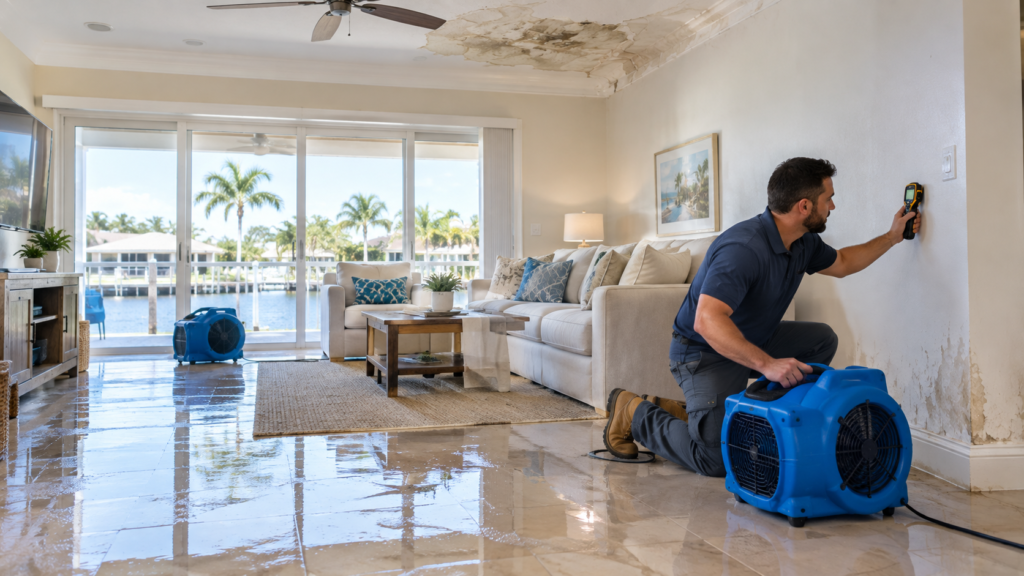
Water damage is one of the most common and costly problems a Cape Coral homeowner can face. It can start with a burst pipe at 2 a.m., a roof torn open by a summer storm, or a slow leak behind a wall that nobody notices for weeks. In a warm, humid climate, what starts as a wet spot can turn into swollen drywall, ruined flooring, and mold within days.
This guide covers why Cape Coral homes are so exposed, the most common causes, the warning signs to watch for, and what to do in the first hours. Knowing these basics can keep a manageable problem from becoming a major loss.
Why Cape Coral Homes Are Especially Vulnerable
Cape Coral’s setting makes it prone to moisture problems. The city has hundreds of miles of canals, and much of it sits low and close to the water table. Many homes are built on concrete slabs, so water that enters has few places to go except into flooring, walls, and insulation.
Add year-round humidity, intense summer thunderstorms, and hurricane season, and moisture has plenty of opportunities. Air conditioners run nearly constantly, which means condensation lines and drain pans get heavy use. Damp materials also stay damp longer in this climate, which gives mold more time to establish itself.
Common Causes of Water Damage in Cape Coral
Plumbing Failures and Burst Pipes
Supply lines, water heaters, and fixture connections fail with age. A sudden break can release hundreds of gallons in a short time. Slow leaks inside walls or under slabs are harder to catch and just as destructive. Our guide on burst pipe water damage in Cape Coral explains what to do when a line fails.
Storms, Flooding, and Hurricanes
Heavy rain, storm surge, and wind-driven water are constant threats during hurricane season. Hurricane Ian in 2022 showed how quickly flooding can overwhelm neighborhoods in Southwest Florida. Even a smaller storm can push water through doors, garage thresholds, and damaged roofing. For flood-related losses, see our flood damage cleanup service. We also handle tornado damage cleanup and hail damage restoration after severe weather.
Roof Leaks
Missing shingles, cracked tiles, damaged flashing, and clogged gutters let rain into the attic. Wet insulation and ceiling stains are often the first sign, and the moisture can hide above the ceiling for a long time. Left alone, it can lead to attic mold.
Air Conditioner Overflow
A clogged condensate drain line can back up and overflow into the ceiling, closet, or garage. This is one of the most overlooked causes of water damage in Florida homes because the AC runs out of sight in an attic or utility closet.
Appliance and Fixture Leaks
Dishwashers, washing machines, refrigerator ice-maker lines, toilets, and sink supply hoses fail all the time. These leaks are often small and constant, so damage builds slowly under cabinets and flooring.
Sewage Backups
When a main sewer line clogs or municipal systems are overwhelmed during storms, wastewater can back up through floor drains and toilets. This is more than a cleanup job because it creates a health hazard. Read is a sewage backup a health hazard and what to do first and see our sewage backup cleanup and sanitation service.
Crawlspaces and Below-Grade Areas
Homes with crawlspaces or lower-level areas can collect groundwater and condensation that goes unseen. Our crawlspace water damage cleanup service handles these hidden problems.
Warning Signs of Water Damage
Not all water damage is dramatic. Watch for these early signals:
- Stains: yellow, brown, or ring-shaped marks on ceilings and walls
- Odors: a musty, earthy smell that lingers, especially in closets or near AC vents
- Texture changes: soft, bulging, or crumbling drywall
- Paint and wallpaper: bubbling, peeling, or cracking
- Flooring: warped, cupped, or buckling boards, and loose tile
- Visible mold: dark or fuzzy spots on walls, ceilings, or trim
- Higher water bills: a jump in usage with no change in habits
- Sounds: dripping, or water running when nothing is on
- Condensation: persistent moisture on windows or walls
If you see any of these, don’t wait for it to get worse. A professional water damage inspection can find moisture you can’t see. You can also read what happens during a professional water damage assessment to know what to expect.
Why Speed Matters
Water moves. It spreads into drywall, baseboards, insulation, and subflooring, and materials like carpet padding and insulation can hold moisture for a long time. In Florida’s climate, mold can begin growing within 24 to 48 hours on damp surfaces. The longer the water sits, the more materials become impossible to save and the more expensive the repair gets.
Wet insulation is a common example. It loses its value once soaked and can hold moisture against framing. Learn more about wet insulation removal and replacement and why it matters after a leak.
First Steps After Discovering Water Damage
Here is what to do, in order.
- Make sure everyone is safe. Stay out of standing water if electricity may be involved. Avoid rooms with sagging ceilings, which can collapse.
- Stop the water at the source. Shut off the main water valve if a pipe or fixture is leaking. If the source is rain or flooding, stop it if you safely can, such as by covering a roof opening with a tarp.
- Turn off electricity to wet areas. Use the breaker panel only if you can reach it without standing in water. If in doubt, call an electrician or your utility.
- Document everything. Take photos and video of the damage, affected belongings, and the source before you move anything. This helps your insurance claim.
- Contact your insurance company. Report the loss early and ask what they require. Keep receipts for any emergency expenses.
- Remove valuables and small items. Move electronics, papers, photos, and furniture to a dry area. Lift furniture legs off wet carpet and put foil or plastic under them.
- Start removing water and improving airflow. Mop up small amounts, open windows if humidity outside allows, and run fans. Larger volumes need professional emergency water extraction.
- Call a professional restoration company. Fast action is the best way to limit loss. If flooding is the problem, our guide on getting immediate flood restoration help in Cape Coral can help.
What Not to Do
Some well-meaning reactions make things worse:
- Don’t use a household vacuum on standing water.
- Don’t use electronics or appliances while standing in or near water.
- Don’t ignore ceiling stains. They usually mean water is still above.
- Don’t turn on a ceiling fixture if water is pooled inside it.
- Don’t assume “dry to the touch” means dry. Moisture hides in walls and under floors.
- Don’t just cover up damage with paint or new flooring.
- Don’t handle sewage or floodwater without protective gear.
When to Call a Professional
Small spills from a clean source can sometimes be handled on your own if they are cleaned up within a day. But you should call a professional if:
- The water covers more than a small area or has soaked into carpet, padding, or drywall
- The water came from a sewage backup, storm, or flood
- You see or smell mold
- The source is unknown or hidden
- Water reached insulation, ceilings, or the subfloor
- Your home has stayed damp for more than a day
Professionals use moisture meters, thermal cameras, and industrial drying equipment to remove moisture completely. For a full walkthrough of what happens, read how the water damage restoration process works. If mold has already started, our mold remediation services and mold growth from water leaks cleanup can help.
Frequently Asked Questions
How quickly does mold grow after water damage?
It can begin within 24 to 48 hours in warm, humid conditions. That’s why quick drying matters so much in Cape Coral.
Can I dry out a water-damaged home myself?
Small, clean-water spills can sometimes be handled with towels and fans. Anything larger, or anything involving hidden moisture, needs professional equipment to dry structural materials properly.
Does homeowners insurance cover water damage?
It depends on the policy and the cause. Sudden and accidental events like a burst pipe are often covered, while flood damage usually requires separate flood insurance. Contact your insurer early and keep documentation.
How do I know if water damage is hidden inside my walls?
Look for stains, musty smells, warped baseboards, or peeling paint. A professional using moisture meters and thermal imaging can confirm it.
Get Help With Water Damage in Cape Coral
Water damage never gets easier by waiting. Whether you’re dealing with a sudden flood or a suspicious stain, acting quickly protects your home and your budget. We serve homeowners throughout the area, including Kismet and El Dorado, Mid Cape, and Cape Royal. Contact us today for fast help, or return to our homepage to learn about all our services.
Leave a Reply